When politics clouds disaster relief
Illinois and other blue states are left wondering why President Trump turned down disaster declarations and the relief for everyday residents affected by flooding and storms

Welcome to the D.C. Vock newsletter, a mix of news and analysis from a very versatile Washington-based reporter. Please share this with friends and social media if you find it compelling, and subscribe if you haven’t already. And if you’re an editor in need of a freelance or full-time politics and policy reporter, well, let’s talk. My LinkedIn profile is here, and you can find me at dcvock at gmail.
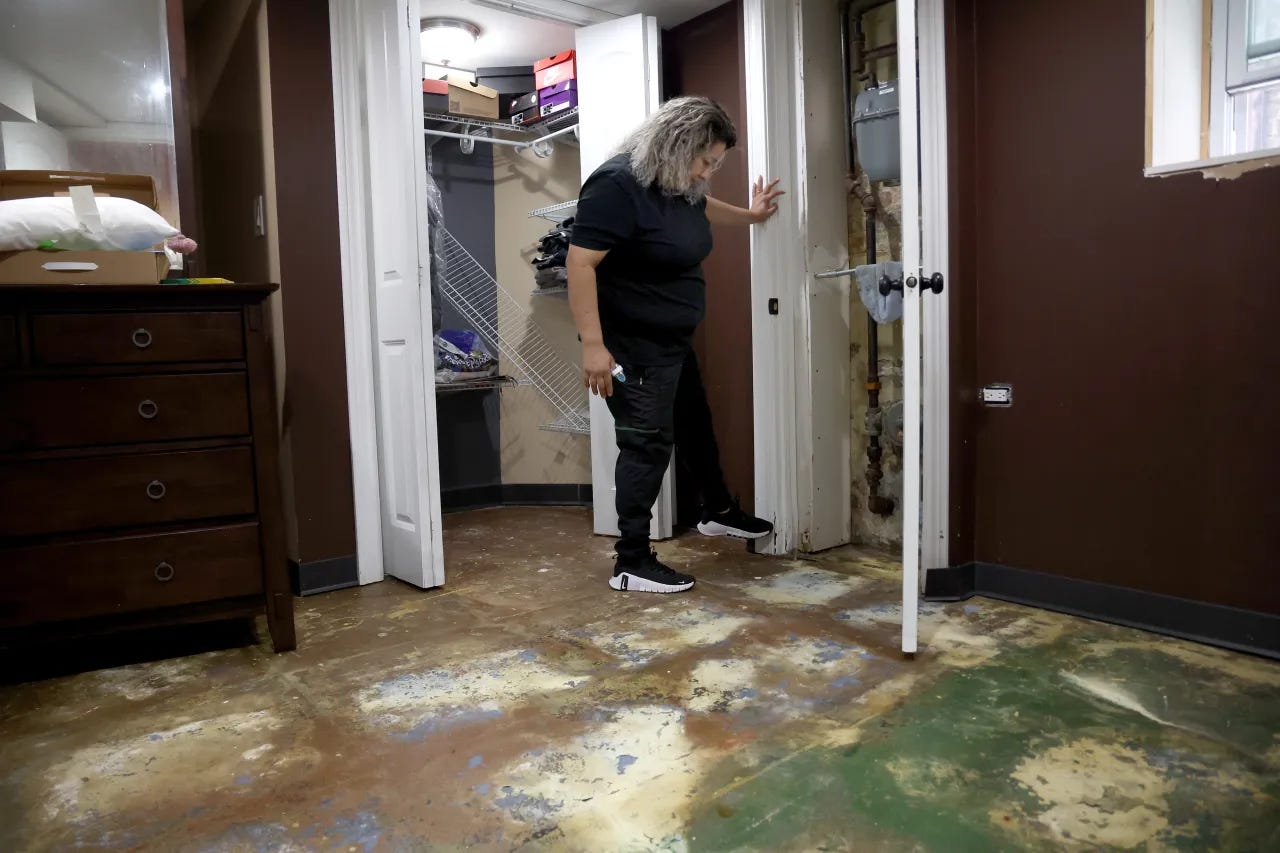
Yuriria Buenrostro stands in her basement on Aug. 19, 2025, after is was flooded following heavy rains in the 5600 block of South Fairfield Avenue in Chicago. All the squares of carpeting had to be removed and discarded. (Antonio Perez/Chicago Tribune)
Summer seems to have barely started, but it’s certainly played havoc with my schedule. Not that I’m complaining. I’ve already enjoyed our wedding anniversary, a Cub Scout camping trip, elementary school graduation, a kid’s birthday, four-square, bike rides, late sunsets and several trips to the pool. Next week, I’ll be going to Illinois to see family over the Fourth.
That means that the newsletter has been a bit sporadic. But there’s one story of mine I wanted to highlight as we get into the summer storm season, plus a few other tidbits related to previous work I’ve done.
ON SUNDAY, I had a front-page story in the Chicago Tribune about the fraught federal disaster response during the second Trump administration. Last year, Illinois Gov. JB Pritzker sought federal aid for residents whose homes had been flooded or damaged during a pair ferocious summer storms in the Chicago area. But the requests hit Trump’s desk at the height of Operation Midway Blitz — the law enforcement surge and immigration crackdown in the Chicago area — that Pritzker vehemently opposed. The president declined both.
It’s not the first time that the Republican president turned down declaration requests from Democratic governors, and the spate of otherwise unexplained denials has raised concerns that Trump — who has the final say in whether to approve the requests — is basing disaster relief on politics rather than need.
“Illinois is the poster child of this,” said Kenny Stancil, deputy research director at the Revolving Door Project, a left-leaning watchdog group. “Previous administrations didn’t use the disaster declaration process to settle partisan scores or punish perceived enemies for alleged disloyalty.”
The Federal Emergency Management Agency insists that it is not playing politics, but the agency’s response to me for the story 1) doesn’t address whether the president is playing politics and 2) does indicate that FEMA is changing priorities so that states bear more of the costs of disasters.
“Any suggestion that disaster decisions are politically motivated does not reflect how this process works or how FEMA carries out its mission,” a spokesperson said in an emailed statement. “FEMA continues to process federal declaration requests and deliver assistance promptly, supporting state and local governments to invest in their own resilience before disaster strikes.” (emphasis mine)
This story comes at a fraught time. Not only is Illinois looking at a record number of tornadoes this year (and the year is only halfway over), but the federal disaster apparatus is undergoing major changes, too. Trump recently named a new leader for FEMA and a new Homeland Security secretary that oversees FEMA. A panel he commissioned also released a long-anticipated blueprint for how to overhaul the agency, which, not surprisingly, calls for less federal involvement.
Check out the whole story with a gift link here.
OTHER DEVELOPMENTS:
Segregation: A group called Brown’s Promise released a ranking this week of school segregation by state. As many of you know, this is a subject I’ve followed for a while after reporting a series on segregation in downstate Illinois for Governing in 2019. Sadly, the data show that not much has improved.
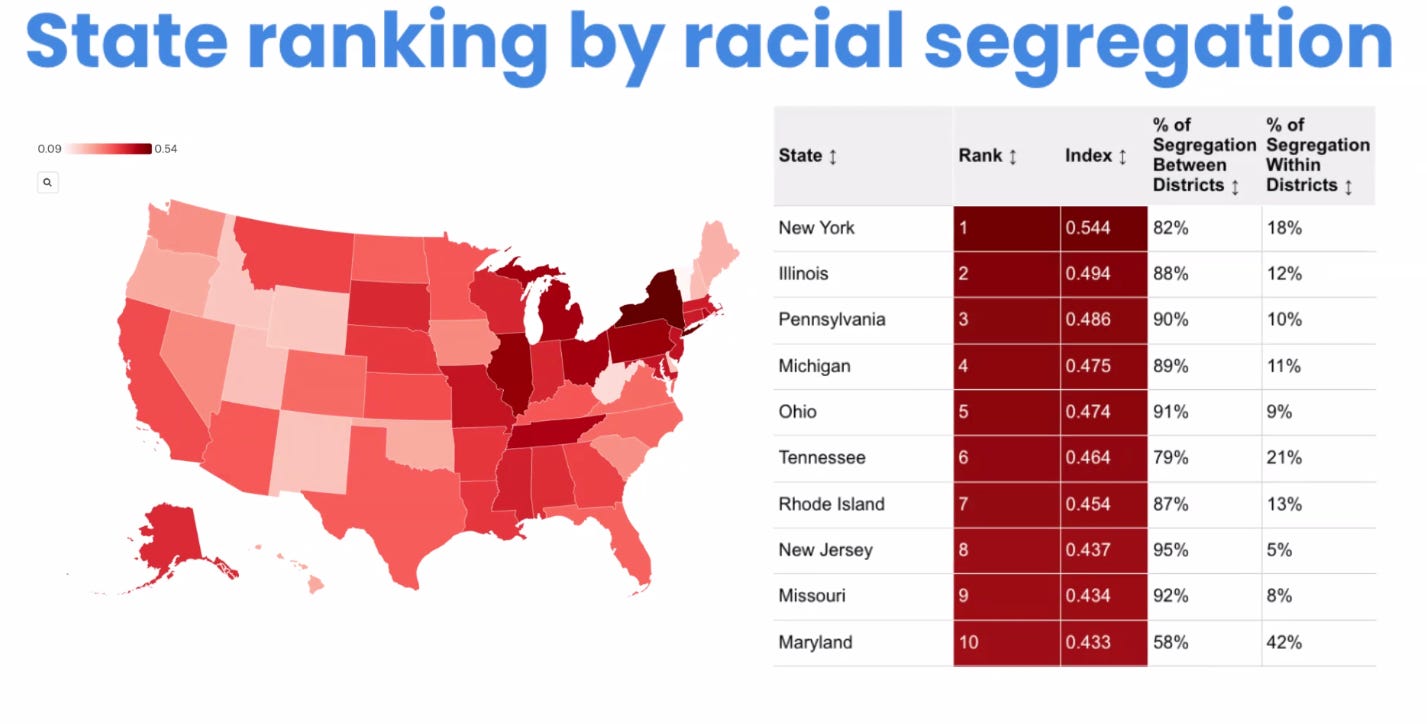
Again, researchers found that the primary dividing lines in school segregation are not within school districts themselves, but between different school districts. Illinois, like many Midwestern and Eastern states, has a disproportionately high number of school districts — and smaller ones. That makes racial integration harder, because the Supreme Court ruled in 1974 in Milliken v. Bradley that courts couldn’t order desegregation measures across districts.
If you’re interested in how schools and school districts actually promote residential segregation, you can check out these pieces of mine:
Still Separate After All These Years: How Schools Fuel White Flight (Governing)
GreatSchools Wanted to Disrupt Online School Ratings. But Did It Make Neighborhood Segregation Worse? (MotherJones)
It’s also worth noting that Dean Olsen of the Illinois Times provided an update on some of the findings from our Governing series last year:
Illinois Times revisited the U.S. Census Bureau data upon which the Governing series was based and compared it to the most recent statistics. IT found that economic gaps between Blacks and whites in the Springfield area have remained about the same and, in some instances, have gotten worse.
It’s unclear exactly why. Some observers attributed the negative changes to the economic impact of the COVID-19 pandemic. But Springfield also lost ground to other similar size or larger areas in downstate Illinois and the Chicago area.
Dean won a first place award from the Illinois Press Association for the story (congratulations!), so it’s worth checking out.
Dangerous SUVs: The New York Times ran a compelling piece this week showing the dangers of Americans’ increasing turn to SUVs and other large vehicles for other people on the road. I’d definitely recommend taking a look, because the visuals really drive the points home.
The Times notes that the move to make large vehicles safer for their inhabitants has made them more dangerous for pedestrians. It graciously noted that other publications like the Detroit Free Press and Consumer Reports had brought attention to this issue years ago. Of course, it’s a drum I’ve been beating for a long time too, and, though I’m not the first one to report on it, I did call it out in Governing even before those publications did. You heard it here first!
What I’m watching…
John Legend and Common performed “Glory” from the movie Selma at the opening of the Obama Presidential Center in Chicago last week. The song seems especially poignant given the Supreme Court’s recent rulings scaling back the scope of the Voting Rights Act, which Congress passed in the wake of the protests in Selma.